
A complete winter hydration guide for cat owners — causes, symptoms, solutions, and when to call a vet.
Many cats naturally drink less water during winter due to lower temperatures and reduced thirst. While this is often normal, it can also increase the risk of dehydration and urinary problems. This guide explains why it happens and provides practical ways to keep your cat hydrated during the colder months.
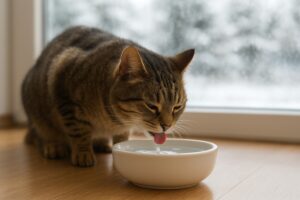
Why Cats Drink Less Water in Winter
- Lower thirst response: Cold weather naturally reduces the body’s thirst signals.
- Increased wet food consumption: Wet food adds moisture and replaces some water intake.
- Unappealing cold water: Water can become colder near windows or floors, discouraging drinking.
- Less activity: Cats move less and rest more, leading to fewer water breaks.
- Underlying health issues: Dental pain, kidney disease, or urinary problems may affect drinking behavior.

Signs of Dehydration in Cats
Watch for these early symptoms:
- Dry or sticky gums
- Reduced skin elasticity
- Sunken or dull-looking eyes
- Dark, concentrated urine
- Decreased appetite or lethargy
If your cat shows severe dehydration or sudden behavioral changes, seek veterinary care immediately.
How to Encourage Your Cat to Drink More Water
- Offer warm (not hot) water: Slightly warm water feels more appealing in winter.
- Try a water fountain: Flowing water attracts many cats and tastes fresher.
- Use multiple water stations: Place bowls in quiet, accessible areas away from litter boxes.
- Increase wet food: Wet food naturally boosts hydration and supports urinary health.
- Add low-sodium broth: Chicken or bone broth (no onions/garlic) can encourage drinking.
- Flavor lightly: A small amount of tuna water can tempt picky drinkers.
- Keep bowls clean: Wash bowls daily to remove film, odors, or dust.
- Improve bowl material: Stainless steel or ceramic bowls are preferred over plastic.
- Stimulate activity: More play = more thirst = more drinking.
- Track intake: Measure daily amounts to understand your cat’s needs.
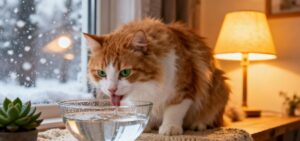
Tips for Senior Cats and Cats with Health Conditions
Older cats and those with chronic issues need closer hydration monitoring. This includes cats with:
- Kidney disease
- Diabetes
- Hyperthyroidism
- Recurrent urinary tract issues
Consult your vet before adjusting diet, fluids, or supplements for cats with medical needs.
When You Should Call a Veterinarian
Seek immediate veterinary help if your cat:
- Has not drunk water for 24 hours
- Shows blood in urine or difficulty urinating
- Has persistent vomiting or severe lethargy
- Is losing weight unexpectedly
Daily Hydration Checklist
- Track the amount of water consumed each day
- Check urine color and litter box frequency
- Weigh your cat weekly
- Record food types and portion sizes
FAQ
Is it normal for cats to drink less in winter?
Yes, this is common due to reduced thirst and cooler temperatures. Monitor for dehydration signs.
How much water should a cat drink daily?
Most cats need around 50–60 ml of water per kg of body weight per day, including moisture from food.
Are water fountains safe?
Yes — they encourage drinking and help keep water oxygenated. Clean regularly.
Can broth help increase water intake?
Yes, as long as it is low-sodium and free of onion/garlic.
Conclusion
It is normal for cats to drink less water during winter, but proper hydration remains essential for overall health. By offering warm water, using fountains, increasing wet food, and monitoring changes closely, you can keep your cat healthy and comfortable throughout the cold season.